Extrafine Merino Wool is one of the most important yarns in the history of Maglificio di Verona.
It has been chosen to create knitwear for babies and children because it combines softness, elasticity, lightness and comfort in garments designed for everyday life.
However, the word “Extrafine” should not be interpreted simply as a promotional expression.
It provides precise information: it refers to the average diameter of the fibres, measured in microns.
To assess a yarn correctly, it is important to distinguish between the different terms that may appear on the label:
A description such as:
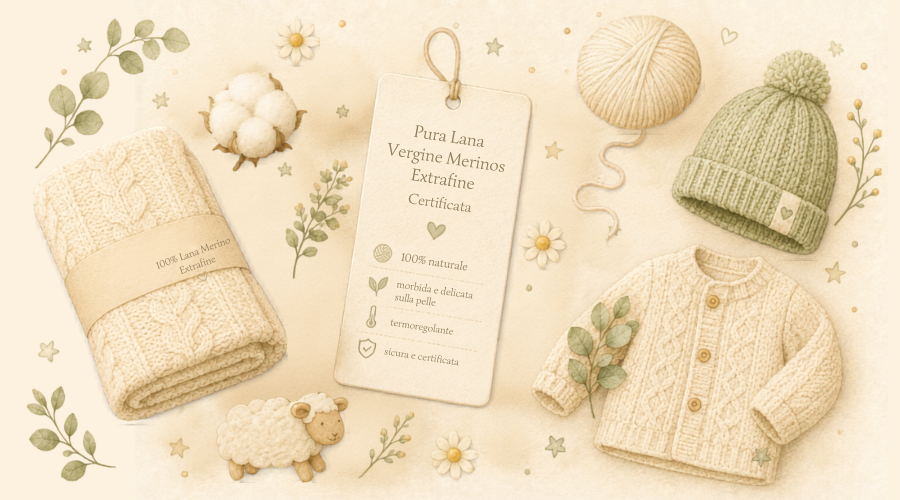
100% Pure Virgin Extrafine Merino Wool
therefore contains several different pieces of information that should not be confused with one another.
For a general overview of the origin, structure and properties of the fibre, read our guide to Merino Wool, its characteristics and properties.
Extrafine Merino Wool is obtained from the fleece of Merino sheep and selected for the particularly small diameter of its fibres.
The word Merino identifies the breed of origin, while Extrafine refers to micron count.
Not all Merino Wool is therefore automatically Extrafine.
Even within the same breed, the following can vary:
The fibre also undergoes several transformations before it can be used on a knitting machine: shearing, sorting, washing, carding, possible combing and spinning.
To learn about the complete process, read how wool is made, from fleece to yarn.
The term Extrafine indicates a category of fibre fineness.
Wool diameter is measured in microns, also called micrometres.
One micron equals:
The lower the value, the finer the fibre.
As a technical reference, the Woolmark specification for Extrafine Merino products sets a maximum average diameter of 19.5 microns, with a measurement tolerance provided for tests on the finished product. This figure represents a technical criterion of that specific certification and is not necessarily the exact value of every yarn commercially described as Extrafine.
The precise micron count of the yarn used for a specific garment should be checked on the relevant technical data sheet.
Micron count is very important, but it is not enough on its own to determine overall quality.
A fine fibre tends to bend more easily when it comes into contact with the skin, but other factors should also be considered:
Tests carried out on wool can evaluate not only average diameter, but also length, strength, colour, yield and the presence of impurities. The finest fibre is not automatically the best for every use: it must be appropriate for the product being made.
A very fine fibre may be ideal for a romper or a jumper worn close to the skin. A different fibre may instead be more appropriate for a textile requiring greater structure or durability.
The itchy sensation associated with some types of wool depends mainly on the rigidity of the fibre ends that come into contact with the skin.
A fine fibre tends to bend more easily.
A coarser fibre may instead offer greater resistance and stimulate skin receptors more noticeably.
For this reason, diameter is an important parameter for knitwear designed for:
Individual sensitivity still varies.
Technical research on wool confirms that fibre diameter is one of the central factors influencing the perception of itchiness.
The four terms describe different aspects.
| Term | Meaning |
|---|---|
| Pure or 100% | The garment is made from a single textile fibre |
| Wool | Identifies the fibre obtained from sheep fleece |
| Virgin | The fibre does not come from the recovery of a previously finished product |
| Merino | Identifies the sheep breed |
| Extrafine | Refers to the average diameter of the fibres |
The term “virgin” does not mean that the wool has not undergone processing.
Before becoming a garment, it may be:
The term refers to the previous history of the fibre, not to the absence of production processes.
For more information on this distinction, read our guide to Pure Virgin Wool and how to read the label correctly.
The expressions “100%”, “pure” and “all” are reserved under European legislation for products composed of a single textile fibre, subject to the limited technical tolerances provided for.
Extrafine Merino Wool is chosen for a combination of characteristics.
The perceived result always depends on the construction of the garment, but the fibre can contribute to providing:
The small diameter allows the fibres to bend more easily when they come into contact with the skin.
Softness and comfort also depend on uniformity, spinning, twist and finishing.
The natural crimp of wool contributes to the yarn’s ability to bend and recover its shape.
This can support:
This does not mean that the garment cannot become distorted: washing, drying, size and storage remain important factors.
Wool is a hygroscopic fibre.
It can absorb water vapour into its structure and release it gradually when environmental conditions change.
This behaviour can contribute to managing the microclimate between the skin and the fabric.
This does not mean that Merino Wool prevents sweating or always keeps the body perfectly dry.
The natural crimp of the fibres contributes to creating spaces in which air can remain trapped.
The amount of insulation, however, depends on:
A lightweight jumper and a cable-knit blanket can both be made from Extrafine Merino Wool but behave very differently.
To understand the relationship between fibre, construction and temperature more clearly, read our guide to wool during transitional seasons and thermoregulation.
The same fibre can be used to create very different garments. Seasonality does not depend only on composition, but also on how the yarn is transformed.
Extrafine Merino Wool does not prevent the body from producing sweat.
Perspiration depends on:
The fibre can contribute to managing water vapour, but a jumper that is too heavy or excessive clothing can still make the wearer feel too warm.
Merino Wool can absorb and release water vapour, contributing to moisture management in the microclimate close to the skin.
The fibre can be worked into garments suitable for different seasons, but not every Extrafine Merino product is automatically suitable for year-round use.
A lightweight stockinette garment may be suitable for:
A cable-knit jumper, jacquard construction or heavy blanket will instead be more suitable for colder weather.
The question to ask is not simply:
Which fibre is it made from?
You should also check:
Its fineness makes this yarn particularly interesting for garments designed for younger children, but composition is not the only factor to consider.
A garment for a newborn should also be designed taking into account:
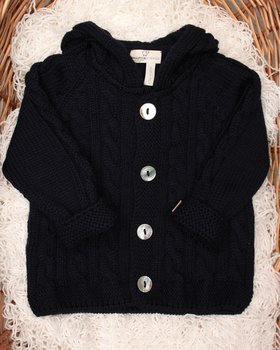
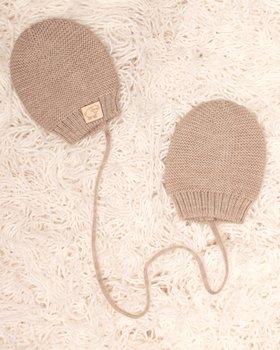
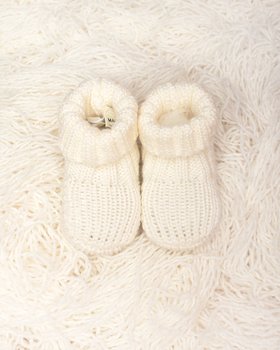
Maglificio di Verona uses Extrafine Merino Wool to create garments such as rompers, cardigans, trousers, jumpers, accessories and newborn layettes. Current product pages state a composition of 100% Extrafine Merino Wool and Made-in-Italy production for these products.
To discover the available styles, explore our selection of newborn knitwear in Pure Extrafine Merino Wool.
A blanket requires partly different characteristics from a romper.
It may be designed to provide:
The presence of the same yarn does not make all blankets identical.
You should consider:
To compare sizes and knitted constructions, explore our newborn blankets in Extrafine Merino Wool.
The yarn used in Maglificio di Verona garments is described on current product pages as certified OEKO-TEX® STANDARD 100, Product Class I.
STANDARD 100 is a testing and certification system that can be applied to textile materials and accessories at different stages of production.
Product Class I concerns articles, materials and accessories intended for babies and children up to 36 months and is subject to the most stringent requirements established by the standard.
The yarn is tested according to OEKO-TEX® STANDARD 100, Product Class I criteria, dedicated to articles for babies and children up to 36 months.
The certification does not automatically indicate:
OEKO-TEX® also specifies that STANDARD 100 is not a generic quality label and does not certify all performance characteristics of the product.
Certification, composition and production quality should therefore be communicated as separate pieces of information.
On Maglificio di Verona product pages, the yarn is also described as shrink-resistant.
This indicates that the wool has been prepared or treated to improve dimensional stability and limit shrinkage during permitted washing.
It does not mean that the garment:
Dimensional stability depends on following the instructions stated on the care label of the individual product.
Extrafine and Ultrafine describe two different classes of fineness.
Using Woolmark specifications as a reference:
The specifications provide for a small tolerance associated with measurement on the finished product.
This does not mean that Ultrafine is automatically better in every garment.
A finer fibre may provide a different sensation, but the result also depends on:
In the case of the Ultrafine yarn used by Maglificio di Verona, the word woollen-spun provides additional information about its preparation and spinning system.
For a complete comparison, read our guide to the differences between Extrafine Merino Wool and woollen-spun Ultrafine Merino Wool.
The choice depends on the result you want to achieve.
It may be particularly suitable when you are looking for:
It may be chosen when the design requires:
However, the two yarns should not be compared solely on the basis of their names.
Weight, machine gauge and stitch can completely change the final feel.
Extrafine Merino Wool and Cashmere do not come from the same animal.
Merino comes from sheep, while Cashmere is obtained from the undercoat of the Cashmere goat.
In general terms, Extrafine Merino offers:
Cashmere, on the other hand, is particularly valued for:
For a complete comparison, read Merino Wool or Cashmere: differences and which one to choose.
A garment made from Extrafine Merino Wool can also develop small pills on its surface.
This phenomenon is called pilling and occurs when some fibres work their way out of the yarn, are moved by friction and become tangled together.
It can be encouraged by:
The initial presence of a few pills does not demonstrate poor quality.
It is important to assess:
Pilling should be removed with suitable tools, without pulling or breaking the knitted yarn.
Before purchasing, check:
Check whether the garment is:
Composition alone does not indicate how warm the product will be.
Consider:
The garment should suit the child’s measurements and proportions.
A larger size does not guarantee greater longevity and may create impractical sleeve length, neckline or overall length.
Ask yourself whether it will be worn:
Check:
Composition, fibre origin and place of production are different pieces of information.
A Made-in-Italy garment can use fibres originating from other countries and yarns produced by specialised spinning mills.
The care label of the individual garment should always be the first reference.
In general, it is important to:
The term shrink-resistant does not remove the need for correct care.
For complete instructions, read our guide on how to wash, dry and store Merino Wool.
Extrafine describes fibre diameter. The percentage must be stated separately.
Merino identifies the sheep breed; Extrafine refers to micron count.
The fibre can be washed, dyed, spun and treated to become a usable yarn.
Fineness, length, uniformity, twist and construction should be considered together.
Weight and stitch determine actual seasonality.
Washing and drying should still follow the care label.
It is wool obtained from Merino sheep and selected for the particularly small diameter of its fibres.
It indicates a category of fibre fineness. As a reference, the Woolmark Extrafine Merino specification provides for a maximum average diameter of 19.5 microns.
One micron equals one millionth of a metre, or one thousandth of a millimetre.
Not necessarily. A fine fibre may be particularly suitable for garments worn against the skin, but quality and durability also depend on length, twist, spinning and construction.
Fineness makes the fibres more flexible and generally comfortable. However, perception depends on the finished garment and individual sensitivity.
It can be particularly suitable when the garment is correctly designed in terms of weight, fit, seams, openings and care.
It does not prevent sweating. It can absorb and release water vapour, contributing to moisture management close to the skin.
It can be worked in different weights, but seasonality depends on the individual garment. A lightweight jumper and a cable-knit blanket are not interchangeable.
No. Virgin refers to the previous history of the fibre; Extrafine refers to diameter.
Ultrafine identifies a class of even finer fibres. However, the final result also depends on spinning, stitch and weight.
It is the STANDARD 100 class intended for articles and materials for babies and children up to 36 months and is subject to the most stringent requirements of the standard.
No. The certification does not automatically indicate organic origin, provenance or animal-rearing standards.
Yes. Pilling can form as a result of friction affecting surface fibres and does not automatically indicate poor quality.
Only when permitted by the garment care label. The stated programme and detergent should be used.
Extrafine Merino Wool is not simply wool described as particularly soft.
It is Merino fibre selected for its small diameter and designed for applications where comfort, lightness and elasticity play a central role.
Micron count contributes to how the fibre feels against the skin, but it does not tell the whole story about product quality.
To assess a garment correctly, you should also consider:
The words pure, virgin, certified and Made in Italy should also be read separately because they describe different aspects.
At Maglificio di Verona, we use Extrafine Merino Wool to create knitwear for babies and children, transforming the yarn through shaping, knitted constructions and quality checks carried out inside our own knitwear factory.
Quality therefore does not come from a single word on the label, but from the combination of raw material, technical expertise and the care with which each garment is designed and made. 🧶🤍
Spedizione veloce e gratuita (>75€)
Filati naturali e pregiati
Design essenziale e senza tempo
Assistenza clienti online
Artigianalità made in Italy dal 1975
Resi facili e veloci