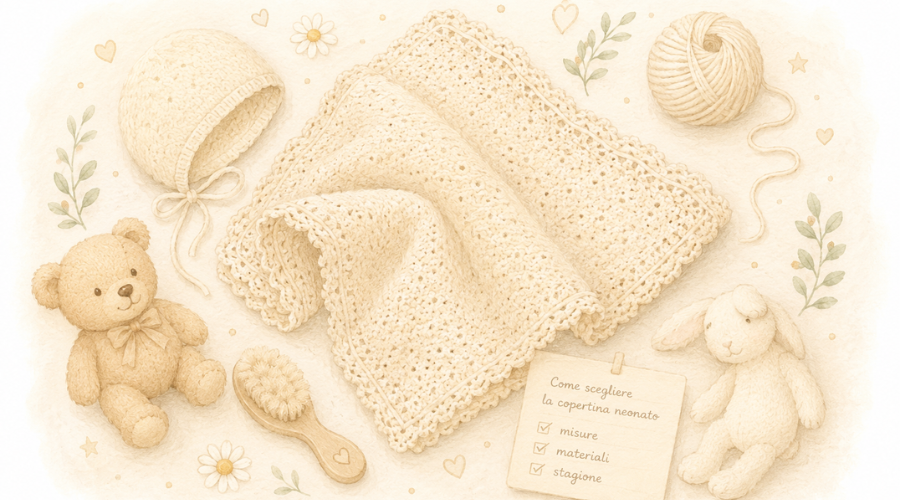
Have you already decided to choose a Merino Wool newborn blanket, but are unsure which model is the most suitable?
The fibre composition is only the first element to consider.
Two blankets both made from Pure Merino Wool can be very different in terms of:
A compact stockinette blanket, for example, meets different needs from a larger cable-knit model.
In this guide, we focus exclusively on choosing a blanket made from Merino Wool. To compare it with cotton, Cashmere, bamboo, eucalyptus and other fibres, read our general guide on how to choose a newborn blanket according to size, material and season.
Merino Wool can be chosen when looking for a blanket that is:
The natural crimp of wool fibres helps create air spaces within the knitted structure. Wool can also absorb and release water vapour, contributing to the management of the microclimate close to the body. However, the actual result always depends on the weight and construction of the finished product.
This means that Merino Wool can be used to create very different blankets, but not that every wool blanket is suitable for every temperature.
To choose correctly, four elements should be considered:
The wording:
100% Pure Virgin Merino Wool
indicates the fibre used, but does not automatically tell you how heavy, voluminous or suitable for winter the blanket is.
A blanket can be:
The choice should therefore start from the finished product, not simply from the name of the material.
To learn more about the origin and general properties of the fibre without making this guide too technical, read about the characteristics of Merino Wool.
The size tells you how large the blanket is.
The weight, on the other hand, helps indicate how much structure and yarn are present, but it should always be interpreted together with the dimensions and stitch.
A larger blanket generally requires more yarn. For this reason, it is not correct to compare two weights without also considering:
A smaller blanket can be practical when it is needed:
A compact size does not necessarily mean that the blanket is very lightweight: the stitch and weight should also be checked.
An 80×100 cm blanket provides a larger surface and may be chosen when you want:
The Cot Blankets category currently includes models in Extrafine and Ultrafine Merino Wool, including several 80×100 cm sizes.
A blanket that is too large can create:
The correct size is the one that suits the available space and actual intended use.
One of the most important decisions concerns the knitted construction.
Stockinette stitch and cables do not only change the appearance: they also affect the volume, weight and behaviour of the blanket.
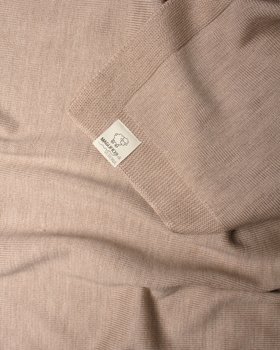
Stockinette stitch generally creates a surface that is:
It may be chosen when looking for a blanket that is:
The result still depends on yarn count, density and number of yarn strands.
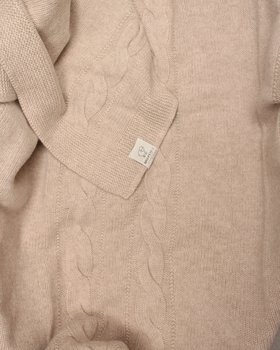
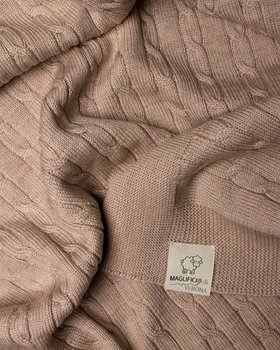
Cable knitting uses the yarn to create raised textures and interlacing patterns.
The surface therefore tends to be:
A cable-knit blanket can be chosen when looking for:
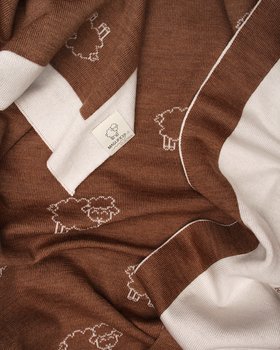
Jacquard knitting makes it possible to create designs and motifs through the combined use of different yarn strands.
It can affect:
Maglificio di Verona uses two types of Merino Wool that can produce blankets with different appearances.
In this article, the comparison concerns only the final result on the blanket. The complete technical explanations remain available in the blog articles dedicated to each yarn.
| Characteristic | Extrafine Merino | Woollen-Spun Ultrafine Merino |
|---|---|---|
| Appearance | Cleaner and more regular | Softer and fluffier |
| Surface | Generally more defined | More textured |
| Volume | Balanced | More pronounced |
| Stitch definition | Well defined | Softer outlines |
| Use | Stockinette blankets, cables and versatile models | Soft, enveloping woollen-spun blankets |
| Friction | Depends on the stitch | The surface may require more care |
| Pilling | Possible | Possible, particularly in areas exposed to friction |
| Season | Depends on weight and construction | Depends on weight and construction |
Extrafine Merino Wool may be chosen when you want:
For all the technical details, read Extrafine Merino Wool: characteristics, micron count and uses.
The woollen-spun Ultrafine Merino Wool used by Maglificio di Verona has fibres measuring between 15 and 17 microns.
When choosing a blanket, it may be preferred when looking for:
The 15–17 micron measurement refers to fibre fineness, while the term woollen-spun refers to the preparation and spinning system.
A complete explanation is available in our guide to 15–17 micron woollen-spun Ultrafine Merino Wool.
There is no single answer that suits every family.
I would not use micron count as the only criterion.
The choice should also take into account:
This is not a general guide to the seasonality of blankets: for that, blog article 88 remains the main reference.
Here we only consider how the weight and construction of Merino Wool affect the choice.
| Condition | Merino Blanket to Consider |
|---|---|
| Early autumn | Stockinette model, compact and easy to remove |
| Late autumn | More structured stockinette or lightweight cables |
| Winter and cooler temperatures | Larger blanket, cables or woollen-spun yarn |
| Heated indoor environments | Lightweight model, avoiding excessive layers |
| Cool spring weather | Stockinette Extrafine Merino or a lightweight construction |
| Mild days | Consider whether a blanket is actually necessary |
Merino Wool can be knitted in weights suitable for transitional seasons, but not every wool blanket can be used interchangeably throughout the entire year.
To learn more about the relationship between weight, temperature and the number of layers, read our guide to wool in spring and transitional seasons.
The intended use affects the choice even when the material remains the same.
I would consider a model that is:
You can choose a blanket that is:
It is important that the blanket:
A blanket made from fine Merino can feel soft and flexible, but it is not correct to guarantee that every person will perceive every yarn in the same way.
The sensation of itchiness depends mainly on:
Finer fibres tend to bend more easily when they come into contact with the skin and can therefore feel particularly soft, while coarser fibres may feel stiffer and more noticeable.
Care requirements depend on the yarn, knitted construction and finishing of the individual product.
The care label should always be your first reference.
In general, it is important to:
We do not cover the entire care process here, as it is already explained in our guide on how to wash, dry and store Merino Wool.
Consider size, weight, knitted construction, type of Merino Wool, season and intended use. Fibre composition alone does not determine how warm or structured the blanket will be.
Stockinette stitch is generally more regular, compact and easy to fold. Cables add volume, texture and structure.
It depends on the result you want. Extrafine generally provides a more defined and versatile surface, while woollen-spun Ultrafine creates a softer and fluffier feel.
The woollen-spun Ultrafine Merino Wool used by Maglificio di Verona has fibres measuring between 15 and 17 microns.
No. A larger size can be useful in the cot but may be bulky in a compact pram.
A compact model that is easy to fold, has a weight appropriate for the temperature and does not create excessive fabric is generally practical.
More structured models, cable-knit constructions or woollen-spun yarns may be considered, while always taking into account the temperature of the environment and the baby’s clothing.
Yes, when the weight and construction are lightweight and appropriate for the actual temperature.
Fibre fineness contributes to softness, but perception depends on the yarn, knitted construction and individual sensitivity.
Wool can absorb and release water vapour, but it does not prevent sweating. A blanket that is too heavy or too many layers can make the baby feel too warm.
Yes. Pilling can occur as a result of friction affecting the surface fibres and does not automatically indicate poor quality.
Only when permitted by the care label for that particular model, using the recommended programme, temperature and detergent.
To choose a Merino Wool newborn blanket correctly, it is not enough to check that the fibre composition is natural.
You need to consider together:
A stockinette blanket can be compact, regular and practical while travelling.
A cable-knit construction can provide greater volume and structure.
Extrafine Merino can be chosen for versatility and definition, while 15–17 micron woollen-spun Ultrafine Merino can create a particularly soft and fluffy surface.
The best blanket is therefore not the one with the most prestigious-sounding name or the largest dimensions.
It is the one that best suits the intended use and the family’s habits.
To compare models, sizes and knitted constructions, explore our selection of knitted cot blankets.
Spedizione veloce e gratuita (>75€)
Filati naturali e pregiati
Design essenziale e senza tempo

Assistenza clienti online
Artigianalità made in Italy dal 1975
Resi facili e veloci