Knowing how to wash wool correctly is essential for preserving its softness, shape and quality over time. Whether you are caring for pure wool, merino wool, extrafine or ultrafine wool, or delicate newborn garments, incorrect washing may cause felting, shrinking and loss of elasticity.
In this guide, you will discover how to wash wool by hand or in the washing machine, which mistakes to avoid and how to dry wool garments without damaging them.
Wool is a natural fibre made up of microscopic scales.
When it is exposed to:
water that is too hot
sudden temperature changes
aggressive spin cycles
excessive rubbing
the fibres become entangled, causing the fabric to felt.
This is why it is important to understand the basic rules for washing wool.
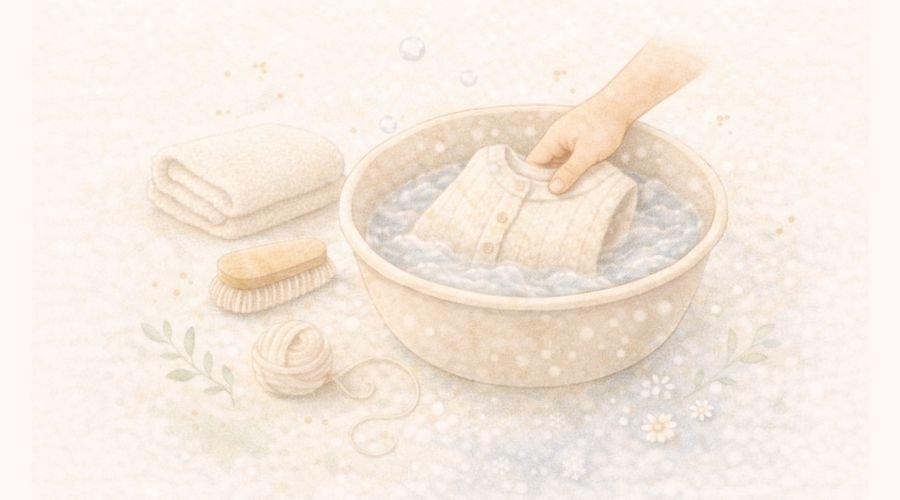
Hand washing is the gentlest method, although it is not necessarily always the safest.
Use cold water or water at a maximum temperature of 30°C
Add a small amount of detergent specifically formulated for wool
Immerse the garment without rubbing it
Leave it to soak for only a few minutes
Rinse using water at the same temperature
Do not wring the garment
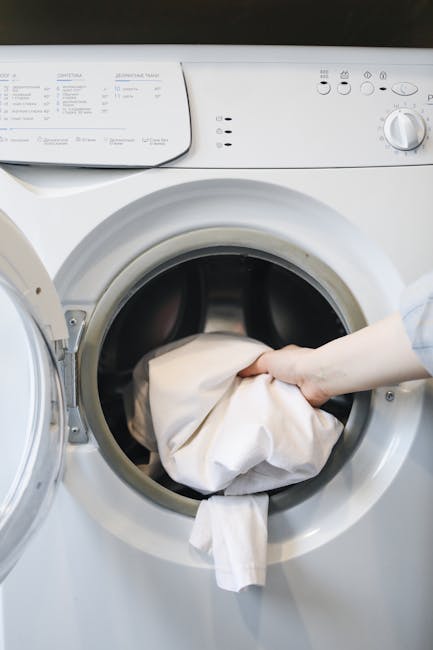
Many modern washing machines include a dedicated wool cycle.
Select the wool or delicate cycle
Use a maximum temperature of 30°C
Choose the lowest possible spin speed
Use a detergent specifically formulated for delicate fibres
Avoid long cycles and high temperatures.
Extrafine merino wool is more delicate than traditional wool, but it can also be remarkably durable when cared for correctly.
It can be washed:
by hand
in the washing machine using the wool cycle
It is important to use detergents specifically formulated for wool garments and not to overload the washing machine drum.
For further advice on washing children’s garments, read our guide on how to wash merino wool clothing for newborn babies.
Drying is one of the most delicate stages.
✔ Gently blot the garment with a towel
✔ Dry it flat
✔ Avoid hangers, as knitted garments may stretch considerably and lose their shape when hung vertically
✔ Keep away from direct heat sources
Do not tumble dry.
❌ Using water that is too hot
❌ Sudden temperature changes between washing and rinsing
❌ Using an aggressive spin cycle
❌ Wringing the garment
❌ Using detergents that are not suitable for wool
Correctly storing garments made from natural fibres such as wool and merino wool is essential for preserving their softness, shape and quality over time. Unlike synthetic fabrics, wool is a living natural fibre that requires a few simple precautions to prevent distortion, dampness and damage caused by moths.
Correct storage also helps preserve the fibre’s thermoregulating properties and natural elasticity.
Store them only when they are clean and completely dry
Use breathable cotton storage bags, avoiding sealed plastic packaging
Avoid damp or poorly ventilated environments
Protect them from moths using natural solutions such as lavender or cedar
During the seasonal wardrobe change, it is particularly important to store garments carefully.
You can learn more in our dedicated guide on how to store wool garments during the seasonal wardrobe change.
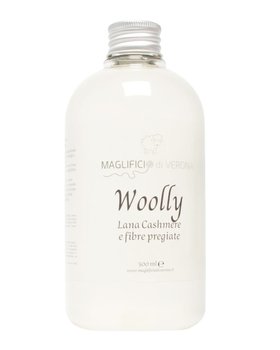
In addition to the washing method, it is important to choose products suited to the delicate structure of the fibre. Merino wool and pure wool require specific detergents formulated to respect their natural elasticity and preserve softness and quality over time.
An unsuitable detergent may weaken the fibre, make it feel stiffer or alter its structure.
For this reason, it is advisable to use detergents specifically designed for delicate fibres, formulated for low-temperature washing and without aggressive ingredients.
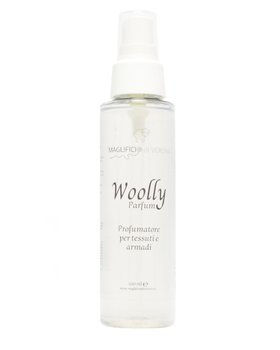
Storage is equally important. During the seasonal wardrobe change, it can be useful to protect garments with natural solutions that help preserve the freshness and quality of the fibres.
Read our dedicated guide to products for caring for wool garments, where you will find advice on specific detergents and delicate fragrances for wardrobes and drawers.
Washing wool correctly means preserving the quality of a natural fibre over time. By following a few simple rules, you can prevent felting and keep garments soft and comfortable.
Caring for wool garments also means recognising the value of a conscious choice: natural fibres designed to last, accompany and protect, especially when they are worn against the sensitive skin of babies and young children.
Quality does not end with the purchase: it continues through the way we care for and preserve what we wear.
Choosing gentle detergents and respecting the correct temperatures is essential, especially for merino wool garments intended for sensitive skin.
Wool should be washed in cold water or at a maximum temperature of 30°C. Higher temperatures may cause shrinking and felting because natural fibres react to heat and sudden temperature changes. It is important to maintain the same temperature during washing and rinsing, avoiding sudden changes that could place stress on the fibres.
When washing wool in the washing machine, use a low or reduced spin speed of no more than 400–600 rpm. An excessively intense spin cycle may distort the garment and compromise the natural elasticity of the fibres.
When the wool programme already includes a gentle spin cycle, there is generally no need to adjust it.
When washing wool, it is essential to use a detergent specifically formulated for delicate fibres or merino wool. Avoid aggressive detergents or products containing bleaching enzymes, as they may alter the structure of the natural fibres.
A good wool detergent should:
respect the elasticity of the fibres
preserve softness
protect colours
remain effective at low temperatures
Choosing suitable products is an essential part of garment care, especially when washing clothing for newborn babies or people with sensitive skin.
Restoring a felted wool garment is difficult and often practically impossible, but in some cases it may be possible to improve its condition.
You can try to:
Soak the garment in cold water with a gentle conditioner or a softening product specifically formulated for wool
Leave it to soak for approximately 30 minutes
Blot it gently without wringing
Carefully reshape it while it is still damp
However, felting is often irreversible.
For this reason, prevention — using the correct temperature, a gentle detergent and a low spin speed — remains the best solution.
Use cold water or water at a maximum temperature of 30°C, avoid rubbing and aggressive spin cycles, and keep the water temperature consistent between washing and rinsing.
Yes, using the wool or delicate cycle, with a low spin speed and a detergent specifically formulated for wool.
Yes, extrafine merino wool can be washed in the washing machine using the wool cycle at 30°C.
Wool may shrink because of water that is too hot, sudden temperature changes or excessive mechanical movement.
No, traditional fabric softener may damage the natural structure of the fibres.
Dry it flat, away from direct heat sources, and never hang the garment while it is wet.

Spedizione veloce e gratuita (>75€)
Filati naturali e pregiati
Design essenziale e senza tempo

Assistenza clienti online
Artigianalità made in Italy dal 1975
Resi facili e veloci